Philosophy of Failure

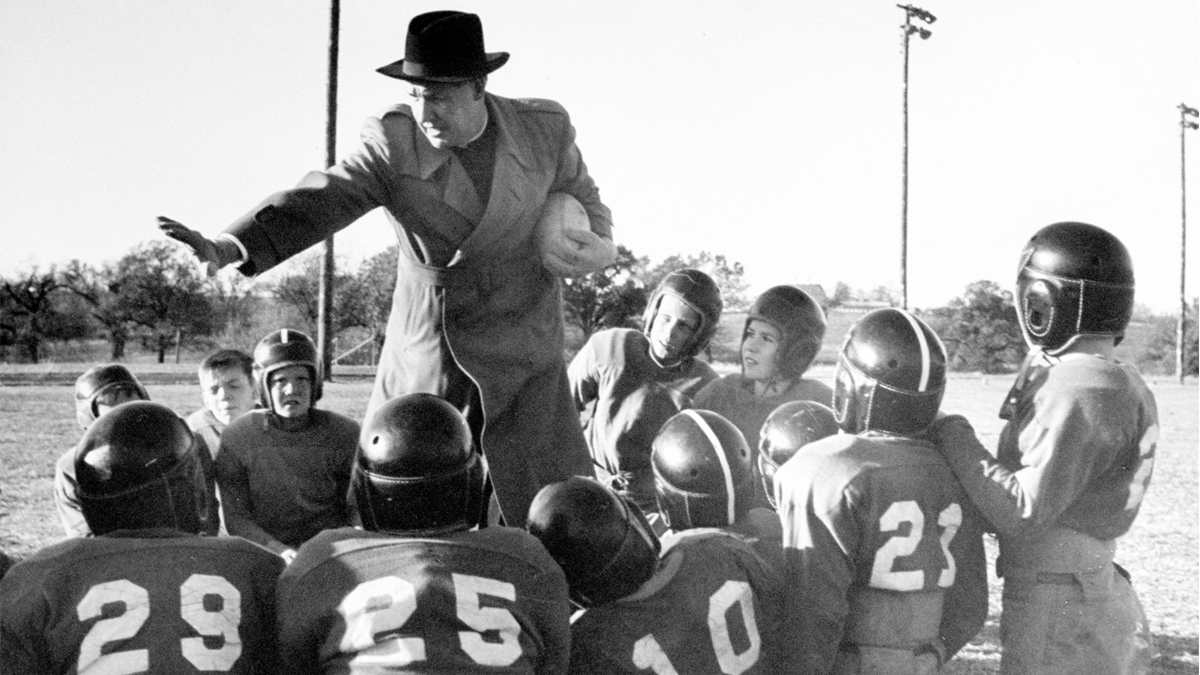
Wrapping my arms around myself a little more tightly, I find myself cheering on the sides of yet another cold and windy field, while I watch a group of boys emulate their soccer heroes.  Their coach yells “show” or “shape” from the sidelines, while the boys put into action the moves that they’ve spent hours practicing.  I watch as the V and Cruyff drills come pouring out onto the field, and succeed as they were intended. 

I also watch as one boy attempts a back pass that fails, spectacularly, sending the ball directly to an opposing player and nearly costing a goal.  On the sidelines, we parents hold our breaths for a beat, before the game goes on.  And we all watch, as not two-minutes later, another boy tries the same move.  It too, falls flat, but this time, there is no audible reaction from the sideline.

Instead, we chat about the first few weeks of school, and how our boys are growing before our eyes, now within spitting distance of adolescence.  A comment is made about the crazy back pass move, and how the coach encourages the boys to use everything he teaches them on the practice field in games, even if they fail, even if they lose.  It’s a new refrain in a competitive sport environment, and certainly not the first time this idea has presented itself.

It seems clear that our attitudes towards failure are shifting.  Certainly, my scholastic and sports careers had very different takes on failure. Essentially, it amounted to do it well, or don’t do it at all.  I have vivid memories of my high school soccer coach screeching and goading us from the sidelines.  He went out if his way to chastise failures or stubbornly benched those whose performance he judged wanting, maintaining that it was the best way to motivate us to improve.  As a youth referee, I also heard parents scream that under-performing kids should be pulled off the field.  The idea of actually embracing failure would have been a colossal faux-pas in their eyes.

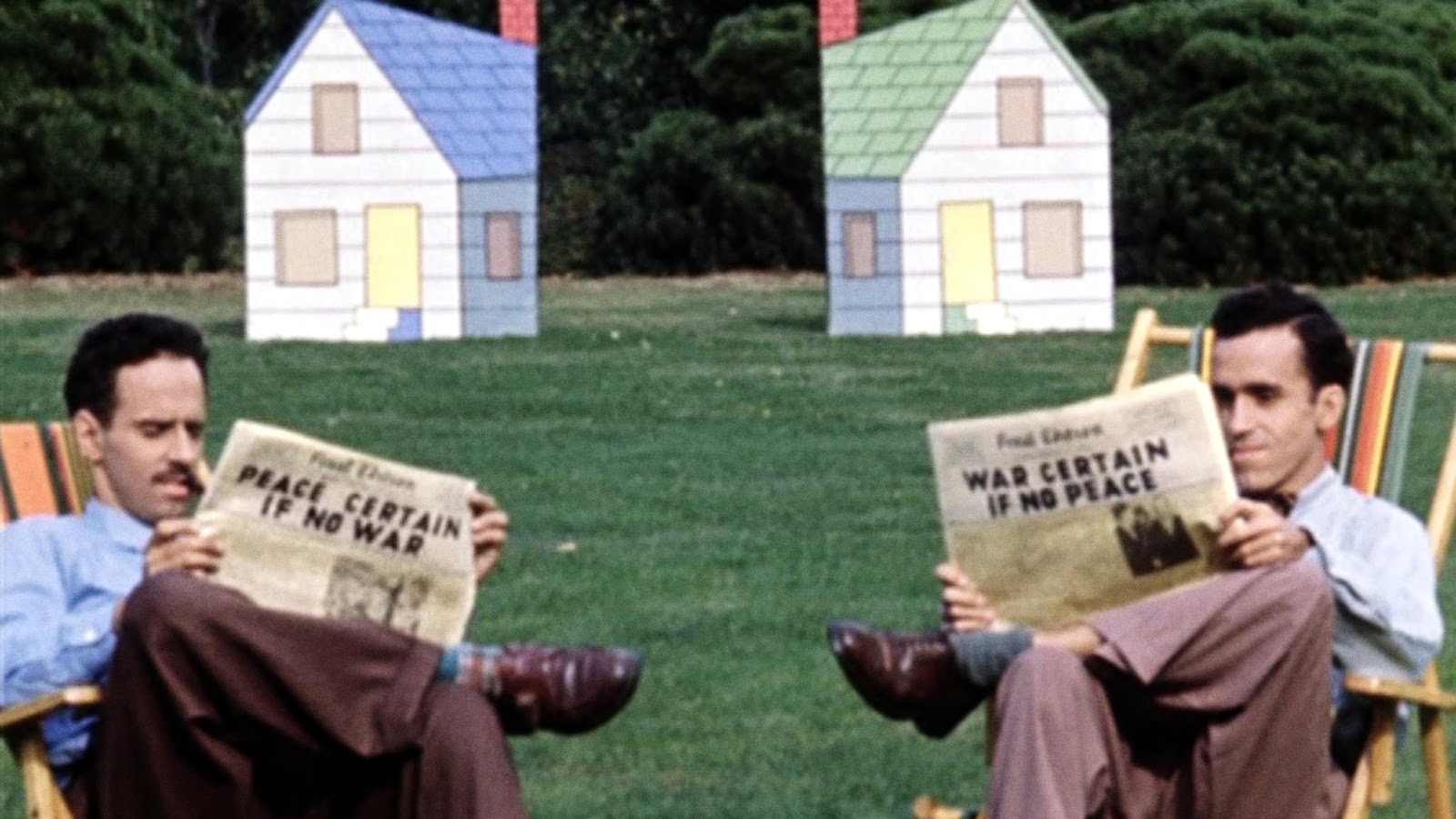
The concept of allowing for failure though is percolating everywhere these days.  As a parent, I’ve heard similar mantras in the schools, at least here in Ontario.  One term that keeps floating around is ‘growth mindset’ – effectively a principle that stands in direct contrast to a traditional understanding of failure.  The idea is attributed to psychology professor, Carol Dweck, who postulated that our minds are dynamic, ever changing and capable of growth.  Failure, therefore, is just another avenue for learning.  The corollary to this is ‘fixed mindset’, which assumes that character and abilities are fixed, and failure is an indication when an individual has exceeded their potential. 

So, what’s changed?  Certainly, the definition of failure remains the same – a lack of success in an endeavour.  It seems, though, that a broader philosophy of failure is emerging.  And like many of the cultural influences we experience these days, I can’t help but look to the technology sector as a prime influencer.    

In a recent TED Talk, Astro Teller, the head of R&D for X (formerly Google X) – the somewhat secretive lab at Google whose mission is to develop far-reaching, and somewhat crazy projects into reality – explained how the company had embraced the benefits of failure.  At X, project teams received bonus’ and accolades when they successfully identified a fatal flaw and canceled their own project.  In fact, they were challenged to start with the hardest parts first with the aim of determining as early as possible whether the project was going to ultimately be attainable.  The idea, Teller noted, was to create an environment where employees felt safe to take risks and bring forward, what he called, moonshots – crazy solutions to difficult problems. 

And X is far from the only company whose ethos is embracing the ideology of soft landings for pushing the envelop on ideas.  A quick internet search gives lists of companies, both in and outside of high tech, that have some sort of reward or celebration for failure.  Publicly at least, a growing number of companies are ascribing to the idea that great ideas come through failure.  But it is the high tech companies, those who seem to push the envelope the widest on innovation, who seem to truly lead on the celebration of failures.

So, the question becomes, has this philosophy of failure seeped its way into the broader culture?   Companies like Apple and Microsoft, where the failures that pre-dated these successes have acquired mythic status on their way to sector domination.  And it’s undeniable, that every aspect of our daily life is now influenced in some way by technology.  Computers, phones, gadgets – they permeate every aspect of our lives. 

What’s more, work culture has been highly influenced, not only by technological innovations, but by work approaches and systems pioneered in technology workplaces.  Think open concept offices, flexible work hours, paperless files, just to name a few.  Is it such a stretch that our approach to education is now under similar influences?

When my kid came home last year with a failed math test, I was torn about how to address it.  He, however, didn’t seem to be concerned at all.  But, I was worried.  Did I need to bring down the hammer?  Should I make him do extra math work?  Do I pull out the “importance of studying” lecture?  Or do I let it slide, seeking to prioritize his confidence over a grade on a single test?

Before I could decide any of this though, my kid settled the issue for me.

“Mr. Smith says I don’t have it yet, but I can do a re-test next week.  I know where I made the mistakes now, so I’ll do better,” he casually stated while grabbing for a snack in the fridge.

And that was that.  Failure in action. 

It remains to be seen in the long run whether this new philosophy of failure will prevail, and whether it will indeed be better for our kids’ education.  But for the moment, I have to say, it seems a far healthier attitude than that of my high school soccer coach.

Here we go again…

So, we’re back at it again.

Several months after a nearly daily barrage of news coverage, speculation, analysis of ‘he-said’/’she-said”, Canadians are thrust into another media circus surrounding SNC Lavalin and federal politicians.

The most recent onslaught has come from an Ethics Commission report, and a subsequent RCMP investigation, looking at the allegation of political interference in a prosecutorial decision.  Earlier this summer, Canada’s Ethics Commissioner, Marion Dion, determined that Prime Minister Justin Trudeau breached federal ethics rules in the SNC Lavalin affair.

In addition to Mr. Trudeau, the players in the original drama included Ms. Jody Wilson-Raybould, one time Attorney General, Ms. Jane Philpot, former Minister of Indigenous Affairs who resigned in protest over the issue, with some smaller parts for the former Clerk of the Privy Council, Michael Werneck, and the Prime Minister’s former Chief of Staff, Gerald Butts.  You’ll notice there are a lot of “formers” in the titles.  In fact, the weeks long drama resulted in all but the Prime Minister leaving their jobs.

For those who may not be as caught up in Canadian political drama, the crux of the story was that Ms. Wilson-Raybould accused the Prime Minster’s Office, and by extension, the Prime Minister, of interfering in a legal decision around the prosecution approach used by the government against SNC Lavalin, a multi-national engineering firm headquartered in Montreal, whose business practices, all agreed, did not align with Canadian law.  The truncated version of the story, Ms. Wilson-Raybould felt the company should be fully prosecuted, the PMO felt that the newly introduced tool of deferred prosecution would be more appropriate.

Weeks, nay, months, were spent debating whether the then Attorney General’s decision was final, whether the PMO unduly interfered, whether Ms. Wilson-Raybould was simply a difficult employee, whether she was right in secretly recording a telephone conversation with a senior bureaucrat.  In the end, it was all moot, as most players involved spoke “their truth”, stepped away, and we all headed into a summer free of the whole drama, though really no better off for it.

Until now…

The specter has shown its face again and will no doubt gain some momentum thanks to the election kick-off this week.  The pundits and politicians are off and running again.  Whether on the offensive to take down the government, or on the defensive, to maintain the government, it hardly really matters.

The news cycle will be clamouring for more information, more dirt, more innuendo, more great quotes.  And we will gobble them up like it is a full turkey dinner with all the trimmings.  We will gorge ourselves, to the point where all we can do, is sit on the couch in front of our televisions or laptops, our belts loosened, and pick over whatever bones may remain.

Meanwhile, stories that truly matter – such as the relentless fast creep of environmental damage, the continuing migration of hundreds of thousands of displaced people globally, or the growing evidence of potential health problems related to vaping – these stories will fade to the background.

So, here’s a novel idea for all the politicians and the pundits as we head into the election.  Why not just agree that while mistakes were made by all in this endless political skirmish, all parties involved did what they felt was best under the circumstances, and let’s move on.  As far as has been reported, none of the players involved had any nefarious intent, none were seeking to destroy the other.  

Any basic leadership course – and there are many of the them available in the National Capital Region – will teach the principles of active listening, being aware of one’s own blindspots, and finding agreeable solutions when faced with conflict.  It seems in no way necessary to highjack the daily news cycle with what was effectively differing, and perhaps misguided, opinions on the best course of action on a single prosecution.

If we can agree to that, then maybe, just maybe, we can spend time during this election discussing things that really matter, like perhaps how to craft an effective climate change plan, or possibly how the country is going to cope with an anticipated slowing economy.   

The good, the bad and the smartphone generation

teens and smartphonesIn an ironic twist, our reliance on digital devices to keep our kids safe and connected to us, may be hurting them.

Smartphones are as much a part of teenage life today as are pimples and first crushes.  Recent data though is pointing to a digital overdose problem and, as parents, we need to help our kids better negotiate their digital habits.

In a recent article for the Atlantic, American psychologist Jean M. Twenge noted that “the arrival of the smartphone has radically changed every aspect of teenagers’ lifes, from the nature of their social interactions to their mental health.”

Recent data collected by the Canadian Technology Association suggests 80 percent of Canadian households own a smartphone.  The current generation of teens are the first to have truly grown up with mobile devices.

With that level of smartphone saturation, it is not surprising that a MediaSmarts survey revealed a high number of teens spending, on average, between 1 to 2 hours per day on devices for non-school work purposes every weekday, and even more on weekends.  Particularly concerning, given the disturbing effect that screens can have on sleep, is the high number of teens who used smartphones at bedtime.  In the Canadian Technology Association study, 79% of parents reported that their 14- to 15-year-olds used their devices after they’d gone to bed.

While it didn’t draw a link between smartphone use and mental health, the 2017 Ontario Student Drug Use and Mental Health Survey did find that  the proportion of students in grades 7 to 12 reporting moderate to serious psychological distress had climbed by 15% since 2013.  The Survey further found that about one-in-six secondary school students related symptoms that may suggest a moderate-to-serious problem with technology use (preoccupation, loss of control, withdrawal, problem with family/friends).

Dr. Lauren Humphreys, an Ottawa psychologist who has worked with adolescents with mood and anxiety disorders since 2003, has seen a range of issues among her teenage patients related to smartphone use, including sleep deficiencies and stress around constant peer judgment.

One of the major issues that Dr. Humphreys has seen around smartphone use has been “the sense of pressure and obligation to be always available for conversations with peers, and to respond as quickly as possible upon receipt of a message.”

So, while there is no definitive proof that smart phones are the cause of rising levels of anxiety for teens, it seems highly unlikely that constant screen use could be helping with stress levels.

But, here’s the kicker.

Despite growing evidence that smartphones may not be good for our children’s mentalsick cell phone health, we keep buying them for our kids.  According to data gathered by MediaSmarts, nearly three quarters of 14 and 15 year-olds in Canada have their own device.
My teenagers have laid out all the logical arguments for why I should buy them a smartphone – they can use it for school, I’ll be able to reach them when I want to, they’ll be able to call me when they change plans or want a ride.  My kids have pegged my parental insecurities and used them to bolster their arguments.  And they aren’t wrong.

There are benefits to digital devices – for learning, for socializing, for recreation.  There is even a sense among parents that a digital tether will keep our kids safer in the big bad world.  However, we wouldn’t give the car keys to our teenager without making sure they have had driving lessons.  Why is it that we are comfortable giving our teenagers a powerful tool without teaching them how to use it safely?

While we can’t do away with smartphones, the good news is that there are habits we can learn, and we can teach our kids, that can help.

According to Common Sense Media, there are some relatively simple guidelines that can help families manage digital overload.

First and foremost, no screens at bedtime.  Simple, manageable and something from which the whole family can benefit.

Next, set clear limits around screen use, and stick to them.  Yes, the kids with harangue you at first, but most parents have already tackled limit setting and lived to tell the tales.

Lastly, and though it seems counterintuitive, know and use the technology.  There are a number of apps and hacks available to help us better manager screen use, such as Screen Time for iphone users or simply deleting social media apps from your phone.

Ultimately, we parents won’t be able to compete outright with digital devices.  But, maybe, just maybe, we can give our kids a few tools to help them along the way.

Everything we need to know, we learned from Star Wars

When I was a kid, like many of my generation, I idolized Star Wars.

When it first hit the screens in 1977, we’d never seen anything like it.  It was a revelation.  We devoured the merchandise, dressed like the characters for Halloween and some of us even tried to learn to speak Wookie.  It had an impact on us in a way no other movie had until that point.

In hindsight, with the cold, cruel light of 2019, the story line is probably simplistic, even cheesy.  The characters were more caricatures without any real depth.  And the effects, when compared with today’s CGI, are so-so.  But, damn, for its day, Star Wars was the coolest thing we had ever seen.

And more importantly, for my 7-year old self, it perfectly explained the complicated, and slightly scary, world in which I was growing-up.

Just like there is every decade, there was a lot going on in the world in the 1970s, and at the time, I was only starting to get vague notions of it all.  The Cold War was raging, and the Vietnam War had scarred the decade.  The Oil Crisis had exposed our vulnerability to, and dependence on, oil.  In Canada, we watched the October Crisis, hosted the Olympics and cheered when Paul Henderson score that fateful goal against the Soviets.  And on top of all that, acid rain was threatening our very existence.

At seven, I didn’t understand most of what was happening.  I picked up the crumbs of elation and anxiety from the adults around me about global events, mixed in with the larger pieces of their own personal dramas.   As I started engaging with the world more, it became clear that it was far more convoluted and complicated than I ever dreamed.  But the Star Wars saga neatly laid it out for me clearly and succinctly.  There was good (light), there was bad (dark) and there was a fear that I recognized in my bones: a fear of loss.

At the heart of Star Wars, and of every human drama, is the fundamental fear that the heroes would lose – their homes, their families and ultimately, their lives.

And perhaps Star Wars has come to mind because I’ve been thinking a lot lately about loss, and how it, or the fear of it, shapes our lives.  In particular, I’ve been thinking about the clash that is currently shaping the political agenda in Canada and around the world.  So much of it is so very much rooted in the fear of loss, and in our tendency to see the world in terms of light and dark.

On one side, there is the fear that immigration and prioritization of environmental stewardship will result in a lost way of life.  And not in the abstract either.  There are legitimate, well placed fears that decisions are shifting national economic foundations, resulting in the loss of industries, the loss of jobs, the loss of livelihoods, which in turn translate into the possible loss of homes, of social and cultural cohesion, of a way of life and safety.

On the other side, there are fears about isolationism and global environmental forces.  These are equally well-placed, and equally legitimate.  Here, there are fears that perceived damage to established political systems and lack of action on economic and environmental stewardship will result in the loss of industries, the loss of jobs, the loss of livelihoods, which in turn translate into the possible loss of homes, of social and cultural cohesion, of a way of life and safety.

My repetitive words are not a coincidence nor poor editing.

I am aware that there are people on the extreme fringes of the political debates, and some whose motivations and fears are rooted in bigotry, sexism, racism and just simple hatred.  Their thoughts and actions are garnering a great deal of attention, obscuring paths to solutions.  They have skewed the debate, misdirecting attention, and hijacking the agenda with ill-informed and hateful ignorance.

But, the fact of the matter is, that no matter on what side of the political fulcrum you hang your hat upon, our fear of loss is the same.  Where we differ are on the causes and the answers.  And rather than focus on the fear that we share, we spend our time ridiculing and vilifying the other because fear makes us do silly and illogical things.

And I can’t help wonder if our overly simplistic view of the world is something that was reinforced through Star Wars.  What we have in common is our fundamental and overwhelming fear of loss.  But we are trapped in the view of the world that we saw in Star Wars.

Don’t get me wrong, I am not blaming the franchise, nor do I think Star Wars taught us to vilify those with different ideas or opinions.  Rather, I think Star Wars, and let’s face it many Hollywood archetypical movies, fed into our expectations that there is good and there is bad.  And it did so, because at the time, the world was being shaped by good and evil forces.  Here in North America, it seemed simple.  Communism, bad!  Middle eastern oil conglomerate, bad!  Capitalism, good!  Democracy, good!

And it’s not that the world is any more complicated or nuanced than it was back then, far from it. Rather, our access to information has hugely expanded.   Ironically, even while globalization and the internet has made it easier to see the broader shapes in the world with all their nuance, we use these tools to reinforce our polarized views of political and social issues.  Today, it’s possible to access ideas and opinions born of different experiences and perspectives than our own with a few key taps, and yet we flock to websites that sustain our own views.

We Generation Xers, who are now taking over leadership and power from the Baby Boomers, were brought up on the good and evil world view.  But, we’re now trying to navigate in an ocean of information, brimming with nuance and shades of grey.  It seems that we cling to our myopic view by seeking out the information and opinions that align with our own, despite the plethora of shades, and shadows, out there.

It’s probably worth noting that I see some hope in Millenials.  They were brought up in a slightly more nuanced world, with the internet as one of their primary instructors and sources of information.  I see evidence of this in the prequel Star Wars stories released in the 1990s while Millenials were coming of age.  Those movies had significantly more nuanced characters.  The hero had a dark side, and we watched him do bad things, but simultaneously felt sorry for him.

The bottom line is that we all have the information and tools needed – literally at our fingertips – to cross the growing divide.  All we really need to do is reach out and take them.  If we don’t do it, we will be the first generation to leave the world in a worse economic position then we found it, and our legacy will be irreparable environmental devastation.

We can no longer let the fear of our own losses lose everything for our children.

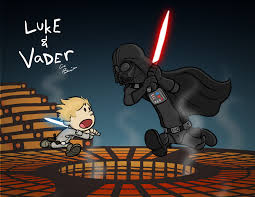
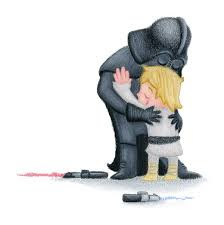
Maybe Star Wars indeed taught us everything we need to know after all.  Maybe we need to be a little more like Luke Skywalker when he 

reached out to Darth Vader, looking past anger and mistrust, to find the good in the “dark” side, and win the day.

Social Media and the Message

In 1964, the Canadian English professor, elevated to popular commentator, Marshall McLuhan coined a phrase that has become a throw-away truism for pop culture.  Since McLuhan penned the term, “the medium is the message,” it has frequently been used in reference to electronic communication.  In its simplest understanding, the phrase is meant to convey the idea that there is as much meaning in how a message is delivered, as there is in what the message says.  For example, reading a story about a missing child in a newspaper has a different impact on the recipient of that message, than hearing it broadcast into their living room via a television.

While he died in 1980, it would have been fascinating to hear how McLuhan would have applied his thesis to the modern internet age, and, in particular, social media.  It’s almost as if McLuhan had a prescient knowledge of what was coming.  Some of his words are no less relevant today, than they were when he uttered them over 40 years ago: “In the old days, you could pull the trigger on a revolver and hurt people, but, today, when you trigger these vast media that we use, you are manipulating entire populations.”

McLuhan would have applied his thesis to the modern internet age, and, in particular, social media.  It’s almost as if McLuhan had a prescient knowledge of what was coming.  Some of his words are no less relevant today, than they were when he uttered them over 40 years ago: “In the old days, you could pull the trigger on a revolver and hurt people, but, today, when you trigger these vast media that we use, you are manipulating entire populations.”

Our love-hate relationship with the message and the media used to convey it, therefore, are long-standing and polemic.   Social media is only the latest iteration in an ongoing topic of discussion.

And yet, it seems that with social media, we have created a level of anonymity and crowd mentality that elevates the ferocity and reach of the message.  That’s not to say that humans have unearthed a new form of viciousness with social media, rather that it has made it easier to give that viciousness broader reach and impact.  The medium amplifies the message.

 Sarah Silverman's Master Class

I was struck recently when I saw an article about the American comic, Sarah Silverman, and her efforts to use the medium to try to address some of the very ri

fts that it has exacerbated in recent years.  Through 

Twitter, and her now canceled Hulu show, I Love You, America, Silverman has embarked on a one-woman crusade to use the media available to her to better understand others, and bring together the divide, at least on an individual basis.

So, my letter today is to Sarah Silverman, a modern influencer who has mastered a medium that seems an unbridled behemoth to the rest of us.


Dear Ms. Silverman:

I was late to social media.  People had been talking about if for years by the time I entered the fray.

For the first little while, I found social media to be primarily entertainment.  While news organizations and politicians used the medium to speak to the broader public, most things seemed the 140-character equivalent of pulp fiction; either light and fluffy, like cat videos, or, literally, click-bait, used to redirect your attention.  Very little of what I initially found on social media seemed particularly insightful, thought-provoking or even useful.

That’s not to say it didn’t capture my attention and send me into a virtual rabbit hole, gouging chunks of time out of my life.  Rather, social media seemed the informational equivalent to cotton candy, sweet and enjoyable at first, but gone in an instant.

And then, two things happened.

In the spring of 2011, a magnitude 9 earthquake, and subsequent devastating tsumani, hit Japan, taking with it large sections of coast line and the Fukushima Nuclear Reactor.  In the first few hours following the disaster, traditional media was blind, unable to get on the ground.  Social media, however, was given a megaphone.  Amateur images and social media posts flooded headlines and television screens.  In the wake of that unspeakable tragedy, it became evident to me that information flow had shifted.

In that same year, we were witness when an anonymously created Facebook page, in an already politically polarized region, launched unprecedented demonstrations in the Arab world, leading to the overthrow of the Egyptian government.  The Arab Spring rolled across the Middle East on the strength of social media.  And while the demonstrators had used the might of social media to unit against dictatorial regimes, as the region moved into a new political environment, that same tool was used to spread misinformation, attack and intimidate individuals, and undermine calls for change.

Fast forward to today, where entire news articles are written about Twitter’s reaction to events, as if the social media platform was a living person.  What’s more, social media platforms are credited with unlimited powers – the power to shame, the power to elevate, the power to influence elections.

The world has now woken up to the true power of social media, and seems to be still holding its breath to determine whether that power is for good, for evil, or just negligent to its impact.

It was in this mind-set that I participated recently in a GrowSmartTalks session on internet safety for tweens, and learned more about what actually lurked out there.  I was shocked to learn of the extent of social media’s reach into our children’s lives – from Tinder for teenagers, to social media sites whose purpose had become high level bullying or worse.  As a mom, it worried me, as a human being, it terrified me.  It was starting to seem that social media was subsuming are instincts for compassion and grace, and, in their place, elevated a platform to drive crowd mentalities rooted in our worst natures.

While I was pondering the fearsome influence social media now has on our lives, I came across a story about some of your interactions in the Twitter-sphere.

With 12.5 million followers and a stand-up career, it was clear to me that you were an influencer in North American culture.  Unabashedly left on the political spectrum and an outspoken opponent of the current U.S. administration, your relationship with social media seemed to be as a massive, glow-in-the-dark target for those who disagreed with your opinions and politics.  From an outsider’s perspective, you seemed to give as good as you got, and had mastered the not-so-delicate art of using the medium to amplify your message.

And then, a little over a year ago, you had a choice to make when a Twitter-troll called you a sexist and derogatory name.  Rather than fire back in kind, you made a conscious decision to respond with compassion.  The end-result was that, through your advocacy, the guy was able to get some desperately needed help with a chronic pain condition.

It wasn’t global change.  It didn’t lead to breaking-down silos or eliminating the polarization that currently plagues the U.S. electorate.  But, it that simple act, Ms Silverman, you demonstrated how social media could be used as a tool for compassion, and good.

In a recent TED Talk, the creator of the original Facebook page that helped launch the Arab Spring, Wael Ghonim, noted that “while it’s true that polarization is primarily driven by our human behaviour, social media shapes this behaviour and magnifies its impact.”

I would take this one-step further – human nature is what it is, and social media allows us to magnify every part of it –  the good, the bad, the silly, and the just plain ugly.  But its power seems balanced between good – as in the case of people searching for their loved ones in the wake of a disaster or when high school students harness its power to bring an end to gun violence – and evil – exemplified when foreign governments successfully manipulate the outcome of an election or climate change deniers manipulate large segments of the population through mis-information on Facebook.

I don’t know where we will go from here, Ms. Silverman, or how social media will shape our characters into the future.  I do know, though, that there is a balance out there.  And if we have more who follow your example of reaching out to those in pain, and using the medium to effect some positive change, regardless of personal political beliefs, maybe, just maybe, we’ll be alright.

We are Holden Caufield

“Don’t ever tell anybody anything. If you do, you start missing everybody.”
–          Holden Caufield
   
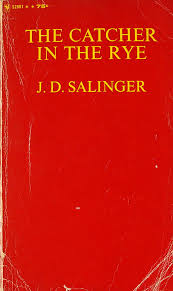
Like many people, I read Catcher in the Rye as a teenager.
And while the novel was, and still is considered, a seminal work, I honestly can’t remember if I read it on my own or if it was required read9a90-CITR252822529ding; nor can I remember if I liked the book or not.  I have no recollection of the impression, if any, the story made on me as a teen, nor did I remember much of the plot.  The only thing that has stuck in my memory over the years is that the lead character, Holden Caulfield, was plagued by a relentless moroseness and aimed his disgust at what teenagers typically target in their bid to be individuals – the system, adults, commercialism.  What I took away from my first read of the book was a true understanding about the idea of ‘voice’ in literature, here was an author who used the voice of a teenager to convey his message.
 
Catcher is one of those books referred to in reverential terms as “the voice of a generation”.  As good literature frequently does, it struck a chord.  Written in 1951, it captured the angst, dissatisfaction, fear and loneliness bubbling beneath the surface of the post-war generation.  It conveyed the emotions and words for youth who, like many before and many since, were suffering from a cultural aphasia preventing them from expressing it themselves.  In so doing, J.D. Salinger opened a dialogue, even if he then swiftly retreated into his own self-imposed exile from that generation.  As Washington Post columnist Ron Charles recently noted, “Holden [was] Patient Zero for generations infected by his misanthropy.”
 
It’s not surprising that the twitter sphere has taken some cracks at tweeting on Holden’s behalf, but there is not a barrage of fan rewrites or add-ons to the book.  Salinger limited the marketing and proliferation of Holden from the very beginning.  No sequel followed, no screen or stage adaptation.  He steadfastly refused to allow Holden to become anything other than what he was – a character between the covers of a book.
 
So, Holden remains as he always has been, never really fitting in wherever he goes – with his family, at school, during his romp through New York.  From the outset, he is damaged, whether by loss of his brother or his own loneliness, it’s never clear.  What is evident when I re-read Catcher, is that he is alone, negotiating that horrible time in adolescence when you are old enough to know there are expectations, but too young to really understand them.   In the opening pages, Holden stands on a hill overlooking the school he has just been kicked out of, and the students who have just ostracized him, (“…because practically the whole school except me was there…”).  And as the story moves along, Holden throughout remains isolated and alone.
 
Literary analysts have noted that Holden envisions himself as the “catcher” of innocents, standing on the edge of the field, trying to catch other children as they come out of the “rye” into the world of experience.  And yet, as his little sister tells him in the book, Holden has the lines wrong from a Robert Burns’ poem.  The line is actually “If a body meet a body”, not catch.  The entire novel is evidence of this, as we follow Holden through his romp with adulthood, living what he believes the adult life to be – in bars, hotels and in the company of a prostitute.
 
But, I would argue that the heart of the novel, and what permeates every single exchange that Holden has, is his deep loneliness and his desperation to connect.  He decries all the phonies, but is drawn to anyone even though his inner monologue reveals his contempt.  His teacher who he goes out of his way to visit but is repulsed by as soon as he sees him (“… old Spencer had on this very sad, ratty old bathrobe that he was probably born in or something”);  his classmates who he can’t stand, but whom he keeps engaging in conversation to stave off being alone (“I didn’t answer him.  All I did was, I got up and went over and looked out the window.  I felt so lonesome, all of a sudden.  I almost wished I was dead.”);  the phone calls he makes to various girls, all of whom he professes to find ridiculous, but yet he can’t stop himself reaching out; the strangers from the taxi driver to the girls in the bar, right up to the prostitute, in whom he seeks solace and human connection, but whom he professes also disgusts him (“They didn’t invite me to sit at their table – mostly because they were ignorant – but I sat down anyway.”) 
 
And yet, Holden also has moments of deep compassion and mature insights (“It’s funny. All you have to do is say something nobody understands and they’ll do practically anything you want them to.”), and a capacity to love (“Then she turned her back on me again.  It nearly killed me, but I didn’t say anything.)”   Does any of this sound familiar?  If the internet could be personified into a single character, it would be Holden Caulfield.
 
Holden, like all of us, is a complex creature with love, hate and everything in between bubbling inside of him.   He is the every man represented through a teenage boy, a boy perched on the edge of manhood struggling to divest himself of the harsh judgment and emotional intensity of adolescence, before the edges of adulthood dull the emotive colours from his world.   Salinger’s genius in Holden is creating an amplified version of us, by harnessing the raw intensity of the teenage voice.
 
Rereading the novel, I can’t help but wonder what Holden’s ‘voice’ would have been had he had access to the current suite of social media tools available today.  Would Holden’s “phonies” be the target of social media campaigns?  Would he use anonymous twitter accounts to tell them all what he really thought of them?
 
I question whether the current culture of over-sharing, media darlings, and shock entertainment would have left any innocence with which Holden could grapple.  If he had grown up in a world where school shootings are common place, celebrities are created by their willingness to have their lives broadcast, and youth have learned to eschew concepts of privacy thanks to Instagram and SnapChat, what would Holden’s disaffection look like?
 
And while I pondered this question, it dawned on me that I hear Holden’s voice all the time.  It is there in every sardonic, derisive, or immature tweet.  It’s there every time a Twitter war starts over an ill-thought off-handed comment.  The only difference is that while most of Holden’s perceptions of people, and the world, remained within the confines of his narrative in the story, today’s youth have no aversions to broadcasting their thoughts.  Catcheris told in the first person, and while we learn through dialogue how skewed Holden’s perspective is, we still see the world through his eyes.  But, his thoughts and opinions stay largely in his own head.  Today, Twitter, Instagram and a myriad of social media platforms allow us to learn what is going through the minds of every single person living in their own Holden moments.  Periods of loneliness, anger, dismay and just plain moroseness come out easily as vicious and spiteful, easily slipping out from behind the mask of a computer or smart phone.
 
We don’t need a writer’s imagination to visualize what Holden would be like today.  We only need to spend 10 minutes on the Twitter-sphere to know that the world is filled with modern Holdens, who voice daily their contempt, pain, and confusion, but also their wonder and love, through the social media platforms of their choosing.  Unlike Holden though, we no longer have a sense of innocence.  We are now on an endless march towards virtual experience.
 
Perhaps that is why Catcher remains relevant 68 years after it was originally published.  There have been 3 or 4 generations since the novel made its debut, and yet little seems to have changed in the human condition.  We still lash out in loneliness and pain, still seek to find the external causes of our hurt (“the phonies”), the only difference is that we no longer need to make our way through a book to read all about it.
 
Salinger was notoriously reclusive, and we will never know what truly motivated his Holden, but he created an iconic character who still resonates today and has become an enduring cultural legacy.  Holden is us, and we are Holden.  ‘Twas ever thus.
 

All the World’s a Stage

Three months ago, I started what I have come to call my “family sabbatical”.  This elaborate title is code for the far simpler fact that I’ve taken a year off from work, to tend to some family needs.
The impetus for this decision was really a kid needing some extra help with learning challenges.  It wasn’t overwhelming, but husband and I agreed that it really should be one of us who provides that extra support.  Over the years, we’d outsourced a fair number of chores, and relied on child care, to be able to maintain our respective careers.  This new challenge, however, was something that we wanted to put onto one of us.   And so, thanks to the benefits available to civil servants, and an understanding and supportive senior management, I’ve stepped away from my career to focus on the “Mom” job for awhile.
 
Don’t get me wrong, this was not a simple decision.  There was months of pondering, talking, debating, weighing pros and cons, self-reflection, and even arguing, before husband and I decided this was right for us.  And while my kids’ needs are paramount, this was not the only factor that went into this decision.  Far from it.  I had to take a hard look at where I was at in my career, in my life, in my marriage, and in my family.  I had to consider who I was, who I wanted to be, and where my dreams were hiding.
 
But the most interesting part about this journey, so far, has been the revelation that I am not alone.  While I’ve joked, and daydreamed, with colleagues and friends over the years about leaving our jobs, and focusing on what mattered in our respective lives, I never really believed that any of us would seriously consider it.  Until I did.
 
And now, I’ve become a canary in the coal mine.   These same friends and colleagues look at me with bemused interest and uneasy curiosity.  They want to know, why I did it?  What am I doing with my time?  Do I miss work?  Am I happier?  What does it feel like?  I sometimes feel like they’re looking at me like a kid would gawk at chocolate-covered broccoli; they’re tempted by the chocolate, but having trust issues with the broccoli.
 
So, this letter is to all those friends and colleagues in the hopes that I can provide some insights.  They may not be entirely satisfactory, but I hope there is enough to help those of you considering your own paths.
 
 
Dear friends:
 
I’ve lied to you.
 
I didn’t know I was doing it at the time, of course, but with hindsight comes some clarity.  Over the years, I’ve said to many of you that I would have no problem taking that step, when it was time for me to leave work.  That if I won the lottery tomorrow, I had a bucket list as long as my arm, and ambitions for a second life in retirement.  I bragged that I would fill my days with things I WANTED to do, instead of things I HAD to do.
 
And while the bucket list is indeed real, and I still have some fabulous plans for “Freedom 50+”, I completely misjudged how difficult it would be to actually step away from my career.
 
I was getting through life just fine, after all.  I had accomplishments, a good career, trusted colleagues.  I was reasonably happy, with healthy, well-adjusted kids, and a strong marriage.  I liked where I lived, was financially comfortable.  I maintained fulfilling friendships.
 
The bottom line was that I was not unhappy with my life.  Sure, I was stretched and stressed, but wasn’t everybody?  I was meeting expectations, and in some cases, exceeding them.   And so, the question of whether to step back from work seemed, initially, to be a ridiculous indulgence.  I was doing just fine, thank you, and my challenges were no different from everyone else’s.
 
And yet, once the notion wormed its way into my brain, it was like a mosquito in the dark.  Quiet for a moment, and then buzzing again in my ear, making it impossible to settle back into restfulness.  With the buzzing, came the questions.  Can I really manage my kids’ needs and maintain the current tempo?  Am I enjoying this pace and intensity?  Am I present in what is happening to me or am I just getting through the day, getting through my life?   Is getting through enough for me?  Or do I want my days to be different?   Am I where I want to be at any given moment in my day?
 
And once I started asking these questions, and truly considering them, it was like a veil was lifted.  I started to see my life from a new angle, and I only had more questions.  Was it normal for my blood pressure to go up 20 minutes before I needed to leave work, because there wasn’t any room for slippage in the evening schedule?  Was it healthy that I could read several pages of a book to my kid, and have no recollection of what I’d read, because I was thinking of all the tasks I needed to get done at work the next day?  Was I being who I wanted to be when I spent every run with a friend ranting about the latest issue rattling around in my brain, instead of investing my time in that friendship and enjoying the endorphins?  Was I insane to even be considering stepping away from a career that I had spent 20 years building, just so life could be a little easier?
 
What finally dawned on me is that all of us spend our lives working several jobs.  Sure, we have our careers, but there are other parts of our lives that take up just as much energy.   We are children, parents, siblings, life partners, friends and community members.  On any given day, we move back and forth between each of these roles.  Some days, we knock it out of the park; other days, we drop every last ball, and watch them roll around aimlessly, before picking them back up again.
 
After all these questions rattled around noisily in my brain for some time, I finally decided that, in fact, I was tired of juggling. I was tired of spending every waking hour concentrating solely on the balancing act.  I wanted to set one or two of the balls down, and stop careening around wildly to keep them all balanced.  I wanted to take a step back, and focus on being a better juggler, and have a chance to watch my act.  You see, I’ve come to realize that my life is one hell of an incredible show, and I was missing huge chunks of it.
 
All that consideration and rumination seems easily summarized in a pithy blog post.  But the blunt reality is that it took me months to work through all these questions.  In the end, taking the leap required that I overcome two ingrained, ever-present and crippling fears.  The first was the fear of “they”.  We all know who “they” are, though we’d be hard pressed to identify them.  It is who we are referring to when we say to ourselves, what will “they” think?  Will “they” say I couldn’t cut it?  Will “they” think I was lazy?  Indulgent?  Weak?  It was only when I managed to ask myself who exactly “they” were, that I was able to step outside that question and see that the omni-present “they”, were, in reality, only my own insecurities personified.  In accepting that, “they” lost power over me, and it felt good to get away from the judgmental bastards.
 
The second fear is much harder to overcome, and I’m still working on it.  It is the very basic, yet terrifying, fear of failure.  In unshackling myself from some of the demands of the ‘have to do’s’, it opened a path for the ‘want to do’s’, and that was the ‘road less traveled’.  What if being home makes no difference in my family’s life?  What if I step back from my career and nothing feels different?  What if I’m wrong about my assumptions and this is not the solution?  What if giving myself this time proves that I was kidding myself about that bucket list, and the dreams die under the weight of expectations?
 
I was walking by a little family run restaurant the other day.  It’s one of those small places that always seats customers by the front window to make it look full of happy patrons.  A family was just arriving; mom, dad, and a little guy about 4 or 5 years old.  While talking to her husband, mom was taking off the little guy’s hat, mitts, coat.  Her eyes were on her husband, with occasional little darts to the kid, as her hands mindlessly performed tasks she’d probably done a million times.  I bet if I asked her what article of clothing she removed first, she’d have no idea.  She may not even remember having done it in the first place.  And it struck me, that’s how I had been living my life; eyes ahead focusing on the next thing while I unconsciously went through a myriad of little actions.  Some of these are meant to be mindless.  Do we really need to be conscious that we are locking the door that we’ve locked thousands of times?  But where is the tipping point?  Where is that moment where you are missing the stories, missing the smiles, missing the tears, missing your life?
 
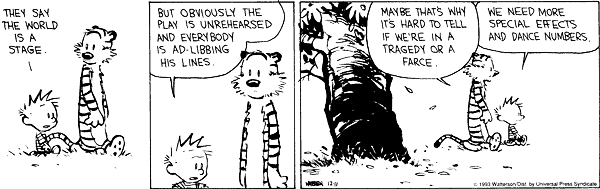
If Shakespeare was right that “All the world’s a stage/ And all the men and women merely players”, then I am still figuring out my part.  I freely admit, that even 3 months into my sabbatical, I am still wrestling with the fears, and I don’t know if I’ve made the right decision.  What I can tell you is that I am not suddenly a perfect parent, my child’s learning challenges have not magically dissipated, nor have I managed to write the great Canadian novel now that I am freer to do so.  But, I feel more like myself than I have in years, I look forward to every single day, and I am writing this post today.  It doesn’t mean every day is perfect, nor that I’m suddenly knocking every day out of the park.  For me, it means that my juggling act is getting a little better with each passing day, and I am a sentient actor on the stage that is my life.  I am not parroting the lines, nor going through the actions mindlessly.  Rather, I am helping to shape the plot as I go, and responding honestly and mindfully to the twists that are put in front of me.  And, for now, I like how that feels.


The Mythic President

President Kennedy has mythic status in US political history.   
 
While his tenure as President was relatively short, he led the country during a particularly divisive time, and his words have been echoed often whenever, and wherever, there is a fight for civil rights or democratic freedoms.   His time in office coincided with a period in US history where fear, bigotry and resistance to change, threatened to tear the country apart.  Sound familiar? 
 
I’m under no illusion that President Kennedy wrote all his own speeches.  Nor do I believe the American Camelot myths.  Kennedy, like all of us, had his strengths and his weaknesses, and, under the lens of history, his Presidency was mixed.  What I find intriguing however, is that during a period of social upheaval, massive global change, and bitter domestic political conflict, President Kennedy had to make a choice about what character he presented to his country.  And, to paraphrase from an earlier President, he chose to give voice to the better angels of humanity’s nature. 
 
Some may say that the tide of liberal democracy, which was starting to rise in Kennedy’s time, has reached its zenith.  There is now a pushback against liberal idealism, and a return of conservative practicality.   After all, we’ve seen these types of ebbs and flows throughout Western history. 
 
However, we’ve also seen the results when a backlash, against either end of the political spectrum, moves from ideological, to fanatical.  Throughout Western history, an enormous amount of blood has been spilled in the name of political virtue.
 
And so, my letter today is to President Kennedy. 
 
 
Dear President Kennedy:
 
The only thing necessary for the triumph of evil is for good men to do nothing.
 
These words, or a variation on them, are well-known.  You uttered them in 1961, when speaking to the Canadian Parliament.  Versions of them have been attributed to such luminaries as Edmund Burke, and John Stuart Mill.  In the latter half of the 20thcentury, this has been a phrase used by many leaders and philosophical thinkers as a touchstone, to remind us all, of the horrors unleashed in mid-20thcentury Europe, when the Nazis set upon their course of eradication, while the rest of the world looked away.  
 
In the wake of the US mid-term election, these words are haunting me today. 
 
Even more so, as this week, in the very same place where you uttered these words, the current Canadian Prime Minister stood before the House of Commons to apologize for Canada’s 1939 refusal to grant asylum to the refugees on the MS St. Louis ocean liner.  Prime Minister Trudeau underscored that Canada’s, and the rest of the world’s, inaction and dismissal of those in peril, made it possible “for the Nazis to come up with their own final solution”.
 
It seems like we are still having to teach these lessons.  While my focus in this letter is on recent developments in your country, I do not believe that the issue we are facing in the first half of the 21st century is isolated in one country alone.  There seems to be a global rise of nationalism, and with it and ugly specter of bigotry and fear mongering among national political leaders. 
 
I understand that many of those who voted for Republicans in this last election did so for a variety of reasons.  They did so because they had strong beliefs about abortion, the economy, law and order, tax cuts, or deregulation.  They did so because they believed in the policy agenda that the Republicans put forward. 
 
I believe that the vast majority of people on this planet, including in the US, are good people.  They are trying to do their best for their families, their communities.  They care for their neighbours.  They try to stay true to their values, they raise their kids to be good people.  They contribute to making the world a better place, and they strive to live harmoniously with others regardless of race, religion or ethnicity.  Yes, there are racists and bigots among the citizenry of the US, just as there are in every nation.  But, I firmly believe that the fast majority do not share the values of white nationalists.

And yet, over the last two years, we have watched a US administration use bigoted rhetoric and actions to incite the fears of these good people.  President Trump, and the leaders in the Republican party, have stoked those very traits typical of good people – their desire to take care of their families and communities – and used it as a weapon to discredit and dehumanize those who do not fit the mold of what this administration believes makes a “good American.”  Their vision is white, middle class and unquestioning of leadership. 
 
And despite the President’s hateful rhetoric and abuse of power, to isolate and target ethnic groups, women and foreigners, good people are looking the other way.
 
They looked the other way when women were denigrated by a candidate for the Presidency, and a disabled reporter was humiliated for his disability.  They looked the other way when a Presidential candidate encouraged crowds to chant for the imprisonment of a female political opponent.  They looked the other way when that same candidate implied that a judge’s ethnic heritage disqualified him from performing his duties.  They looked the other way when one of the first acts of this Presidency was to use an executive order to ban people from entering the country from a certain religious group.  They looked the other way when people with a specific gender orientation were banned from military service.  They looked the other way when the President of the United States encouraged violence against media outlets that he felt were being unjust to him and questioned the validity of their broadcast licences.  They looked the other way when the President of the United States re-distributed videos from white nationalist groups and refused to admit any wrong-doing when it was proven that the videos were fake.  They looked the other way when the President publicly supported a political candidate who had been found guilty by the court of racial profiling while a Sheriff.  They looked the other way when children – mostly of certain ethnic groups – were used as deterrents for illegal immigration.  And they looked the other way when the President sent 5000 soldiers to the southern border to deter Hispanic refugees, who are walking thousands of kilometers in the search for a better life.
 
The list is endless and exhausting.  The administration’s rhetoric and hate-filled targeting, ultimately culminated in the lead up to the 2018 mid-term election, when a disenfranchised, isolated and troubled individual, interpreted all this rhetoric and bigotry into a licence to send pipe bombs to individuals, and media outlets, that publicly disagreed with the President.  And still, the President refused to tone down the rhetoric.
 
Despite all this, good Americans looked the other way, and they voted to continue supporting this administration’s policies and agenda.  From what I see, that’s a lot of looking the other way. And I can’t help but wonder:  how big does the evil need to get before it gets noticed?
 
President Kennedy, I am turning to your words and those of your contemporaries.  I am hoping that the lessons of the past will not be forgotten.  I am counting on your legacy, and voice, to believe that it is possible for a country suffering through a divisive time, to find the path which allows, in the words of Dr. Martin Luther King, to “decide to choose love over hate.  Hate is too great a burden to bear.”
 

To our neighbours

So, there’s a letter I’ve been wanting to write for awhile, but I’ve been hesitant to write it, as it is inherently political.

It’s been bubbling in me though as I watch the political circus play out south of the border.  Almost every day, there is a new sensationalized event, that both Republicans and Democrats chirp on about, using hyperboles to explain how today’s event is the worst possible thing the other side has ever done.

But these last two weeks?  The last two weeks have taken the cake, eaten it, and ran around the block with it.

What I watched last week was a woman, clearly traumatized and terrified, and completely credible, come forward with her truth.  And I also I watched both sides of the aisle capitalize, strategize and collude amongst their respective camps on how to make this event work best for them.  Dr. Christine Blasey Ford went before the US Senate Judicial Committee to openly discuss her alleged sexual assault by a nominee for the Supreme Court.

And every member of that committee somehow thought this was perfectly ok.
Don’t get me wrong, I firmly believe that every single member of that committee was doing exactly what they felt to be right.  And that is was scares me most.  Each firmly believed that the alternative to their view is the worst possible thing that could happen to their country.  But, make no mistake about it, Dr Ford was there out of necessity, because all members of that committee needed her to be, so that they could make sure their belief was sustained.  Whether it be the Democrats – who used the hearing to take political shots about why the Republican nominee to the US Supreme Court, Brett Cavanaugh, should not be confirmed –  or the Republicans – who actually brought in a prosecutor to undermine Dr. Ford’s credibility because they knew a panel of 11 men would have no standing to question her on their own – what we witnessed was utterly shameful.
I can’t pretend that I am in any way surprised.  The political divide in the US appears so entrenched that the notion of the “ends justifying the means” seems ingrained.  But it scares me nonetheless.  Not only because of the anger and vitriol that seems to be par for the course in American political culture these days, but because like most American culture, it tends to seep north of the border.

And while I am fully aware that my words will sway no one, I can’t help but pen a letter from a Canadian to my American neighbours.


My dear American neighbours:
I’ve been watching from up here in the Great White North with morbid fascination for the last couple years, and have been quietly astounded at what is transpiring in your country.  While it seems to have culminated in the election of a profound and unabashed narcissist as your President, this particular train, to quote the Tragically Hip, has “been a long time a comin”.

I grew up feeling a kinship with Americans.  Though I am loath to admit it sometimes, our shared history on this continent, our familiarity with American culture, and the ease with which we could move about in each other’s countries, made us feel similar.  But I’ve been watching US politics over the last couple of decades and it seems like there has been a fundamental shift in tone.  What I hear now from so many on the political spectrum is anger, disgust, fear and outright belittling.  Perhaps it is just the prevalence of social media that has given voice to these extreme views, but it is utterly astounding to watch a country that was founded on the rights of individuals focus on personal attacks and vitriol, above policies and ideas.   And what scares me most, knowing the huge influence the US has on Canada, is that it’s coming here.

We saw it in the Reagan, Bush, Clinton and Obama eras as well, though admittedly it has gained speed and ferocity in more recent years.  We saw it when Democrats relentlessly questioned President Reagan’s credentials for President, when President Bush Sr. was vilified as a baby killer for his decisions on Kuwait, when Republicans gleefully poured over the salacious details of the Lewinsky affair, and when self-righteous birthers demanded to see Mr. Obama’s birth certificate.  The media has been calling it the polarization of America – this entrenchment into political camps, each of which directly or indirectly questions the very ‘goodness’ of political claims or ideas that do not align with their own.
Just so I am indeed completely honest, I think the current administration is morally compromised.  I believe that they are so committed to their version of history and events, that there are no longer any moral standards by which they will abide.  They are able to convince themselves that the greater good is served with the election of a man who feels no shame in publicly belittling or mocking anyone who disagrees with him or who doesn’t fit into his version of history.  They have convinced themselves that whatever collateral damage he inflicts is worth the sacrifice because he has a base, and perhaps they tell themselves that he stands for what Americans believe in.  He is after all, a charismatic guy.
But what I saw last week was a group of privileged, white men willing to explain away what is clearly a credible, though disproven, allegation about a Supreme Court nominee.  If this man were applying to be their gardener, they would take these accusations seriously.  But they are so blinded by what they believe to be the greater good, that they are willing to confirm a man who may, just may, have gotten so drunk that he could have assaulted a teenage girl.  We shouldn’t be surprised.  After all, they were so blinded, they were willing to support a presidential candidate who admitted to sexually assaulting women, belittled and threatened minority citizens and, who since coming into power, has proven himself to be utterly unfit for the position.
But, at this point, I don’t believe that the Democrats would be any different in power.  The examples are just easy to find right now because it is the Republicans who control the political agenda.  Listening to the hate and vitriol that spews from both sides of the aisle, it is hard to believe that the country could ever be whole.
And so my friends and colleagues to the south, as an observer, I come with the simple question: Who do you want to be?
You now find yourselves in a position where politicians can lie openly with no consequences.  Don’t get me wrong, I don’t think they were ever saints, but at least when they were caught in a lie, there was repercussions and penance.  Now, it all gets explained away, and ignored, because “that’s just how things are now” or worse, the other guy is the one lying.  And, at the same time, political opponents in the public eye – whether they be senators or tv news personalities or talk show hosts – have no compulsion about eschewing all pretense of respect, and hateful insults are hurled in desperation and despair.  Is that really who you want to be?  Do you think so little of each other, your country and your democratic institutions that they are all expendable in the down and dirty race to get to your version of the political ideal?

What I feel most about what I am watching is not anger or frustration.  It is sadness. I am watching the decline of an empire, that is tearing itself apart from within.  Perhaps it is inevitable.  Maybe this is the way of empires – that they eventually tear themselves apart under the weight of their power and prestige.   But it is no less awful to watch, and to see the collateral human damage left in its wake.

This November, as has often been repeated, Americans will have a choice to make.  It will not be about Democrat or Republican, it will be about what kind of country you want to be.  Whether you will reward search and destroy politics or whether you will turn to the notions of respect and dignity.  Maybe it’s too late.  Perhaps the dye has already been set.  I don’t envy you the choice.  For many, it will be gut-wrenching.  For others, it will be simple.  For all, it will be a defining moment in your history.  And for my country’s sake, I hope your choice echoes the words of one of your own when you’re country faced a momentous division:

We are not enemies, but friends. We must not be enemies. Though passion may have strained, it must not break our bonds of affection. The mystic chords of memory will swell when again touched, as surely they will be, by the better angels of our nature.

I was lucky enough to a production of he musical Hamilton recently.  It is utterly brilliant on so many levels and so on point with where the US finds itself in its current history.  Near the end, there is a scene where Hamilton and Burr duel.  At the very end, Burr fully grasps the most important lesson from his decades long relationship with Hamilton.  He sings: “I should’ve known; The world was wide enough for both Hamilton and me.”  

I just hope Americans remember this lesson in time


Dear Coach

Over the last few years, I’ve had an opportunity to get to know more about coaching.
Don’t get me wrong, that’s not to say that I’ve learned “how” to coach.  No, that is a skill I will likely never master.
Rather, as a mom with kids in sports, I’ve been an observer at practices, games, meets, tournaments, where I’ve watched coaches interact with their young athletes.  I’ve seen volunteer parents who know nothing about the sport take on the challenge.  I’ve watched trained and experienced coaches lead a group of rookies in the sport.   And, I’ve had a chance to watch everything in between.
I’ve even taken a rather unsuccessful crack at coaching myself as one of those keen, but really clueless, parents who knew the sport, but had no idea how to teach it.  You know the ones.  We mean well, but we have no idea how to explain to a child how to wind up for that shot, straighten their start or make that crisp pass.
My own coaching career culminated in a snow pile.  Towards the end of the season, I was leading a practice on a field strategically positioned just beside the Zamboni door of an arena.  It being late summer, it was, apparently, time for the Zamboni to empty its snowy guts at the edge of the parking lot that the arena shared with the field.  For an entire practice, I tried to get the kids to focus on the drills or my instructions, rather than the enticing grinding as the Zamboni dumped more and more of its icy contents.  With 15 minutes left of the practice, I gave up, and yelled: “King of the Castle!”
The kids didn’t need another prompting.  Within seconds, they had flown across the field and were bounding up the snow mound faster than I’d seen them run all season.  A hilarious, wet and utterly glorious snowball fight ensued.  I subsequently learned that not only have elementary schools in my community outlawed the practice of snowball fights, kids are no longer allowed to climb up big snow pack hills.  Needless to say, I yet again questioned what the heck I was doing coaching.
All the above to say that I have nothing but the utmost respect for coaches, the role they play for the teams they are coaching, and the importance of them in my kids lives.
There is one thing, however, that I didn’t notice while I was coaching but that I wished I had known.  Maybe experienced coaches already know this, but as an observer (and a paltry practitioner), I thought it worth raising in a post.

And so, a letter to the Coach…


Dear Coach:
First off, let me applaud you.  Coaching is a rather thankless task.   The kids will frequently grumble about the drill or the push-up you’ve assigned, and will rarely thank you themselves.  While the parents?  Well, they will MEAN well, but they can have high expectations of what you’re able to accomplish with their child or the team – some realistic, some not so much.
But let me tell you, while those kids will, at times, blame you, ignore you or drive you insane, never, ever doubt that they are watching you.
They are watching the way you walk, the way you talk, what you eat, how you move, and even what you wear.  They are taking in every aspect of who you are and drawing conclusions – in the literal way that kids do – about how they should ‘be’ in this world.
This was brought home to me – literally and figuratively – when we had the opportunity this past summer to host a couple of out of town coaches for a summer sports camp. The “boys” as we called them – though they were young men in their early 20s – stayed with us for a week.  They were polite, respectful, engaging and oh so young to my 40-something brain.  They spent their days with the kids at the camp, but had most of their dinners with us, so we got to know them a little.
For my son, the coaches were better than if the iPad and the Xbox merged into a single super electronic Mecca. He watched absolutely everything about them and asked a million questions.
Before they arrived, he wanted to know everything he could about them.  Who are they?  Where are they from?   What do they eat?  Do they play?  How old are they?  Do they speak English?  He peppered us with endless questions before the camp organizers even gave us names.
When we finally got a short bio for each coach, my son poured over the photos and the little information provided and instructed me on what foods we could and couldn’t make for them.  And again, the questions came incessantly.  How old are they?  Where were they born?  What to they do?  Do you think they’ll like it here?  I was honestly dumbfounded by the interest.  I thought he’d find it interesting, but his admiration and “star-struckness” were palpable.
When the coaches finally arrived, my normally incessant talker who can’t sit still was in a minor trance.  At meal time, rather than his customary regular ups and downs, he was silently still the whole meal.    From my vantage point at the table, I could see him alternating between intense concentration on what they were saying and eyes shyly darting back and forth.  He didn’t leave the table once while they were there.  He didn’t get up and down and fidget about.  He was glued in his seat until the meal was over and the coaches left the table.
And his observations about these two boys would have put Sherlock Holmes to shame.
He noticed that Coach Liam wore a chain around his neck that he adjusted when he was bored.  He noticed he didn’t think much of international football, supported Liverpool, that he said crisps for potato chips and that he was tired a lot.  He noticed that Coach Haroom had shwarma for lunch everyday, liked to laugh at the kids’ jokes, had more energy on the field and didn’t like the heat.  My son noticed what they ate, how they talked, how they held themselves.  He noticed it all.
I knew from experience that their coaches have an impact on my kids’ lives.  They choose what to eat, or not eat, they change their body positions or how they move, they adjust their attitude or their perspective all based on what the coaches have told them.
But let me tell you, Coach, it is far more than what you say and do in practice that impacts the kids.  They are watching and learning from absolutely everything you do – your tone, your body language, your preferences and your off-handed comments.
They may not seem to be listening to your instructions, may be goofing around and you may have to explain to them for the 10thtime how to do the drill, but never doubt whether they are watching you.
They are taking it all in, processing, absorbing and learning from you in ways you might never expect.  They are learning how to be an athlete, a teammate and deciding what kind of person they want to be in life by watching what you do, how you interact with them and with others.
Whether you know it or not, Coach, you are on a stage every time you step onto that deck, field or gym.  When your team is around you, you are in one of the most intense spotlights you will ever experience, and you are helping to shape the next generation.
It’s a pretty intense role, and I wish you strength and luck.  And I offer my gratitude, as well as my quiet plea to take care of your charges.  Whether you know or it not, you are helping to shape these kids, and that is an awesome responsibility.